
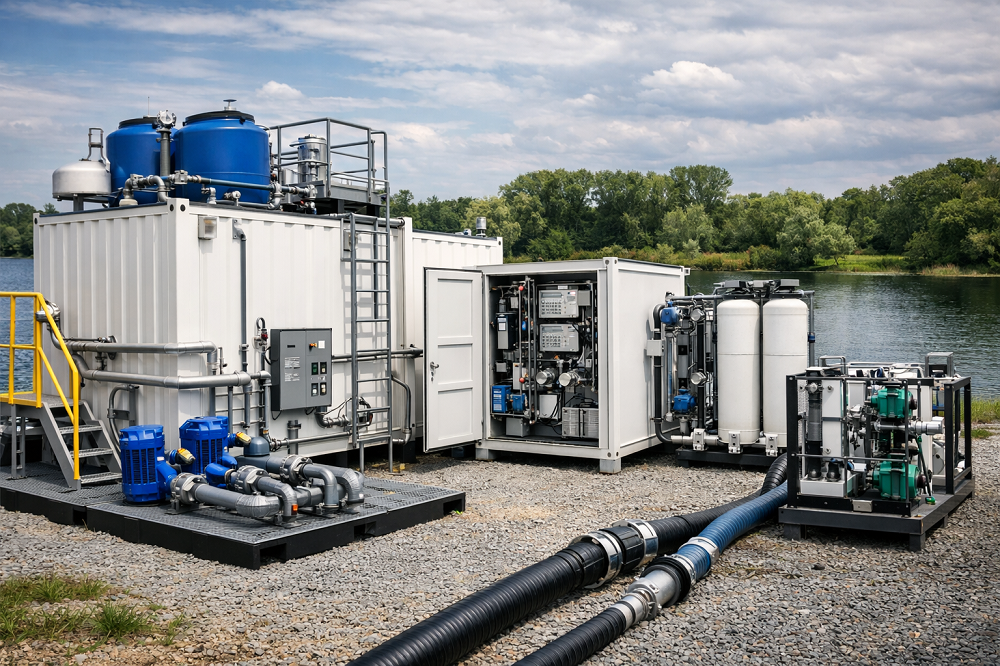
The Shift Toward Modular Treatment Plants: Why “Plug-And-Play” Wastewater Systems Are Gaining Popularity
Across the globe, municipalities, industries, and communities are facing mounting challenges in managing wastewater. Population growth, climate change, urban expansion, and tightening regulations are pressuring traditional centralized systems. In this landscape, modular wastewater treatment plants have emerged as a forward-thinking solution. Often referred to as “plug-and-play” systems, these innovative setups are rapidly becoming the preferred choice for efficient, cost-effective, and scalable water treatment.
Unlike conventional infrastructure-heavy systems, modular and packaged wastewater treatment systems offer flexibility and ease of deployment that can meet modern demands without overhauling existing landscapes or budgets. From rural communities to mining operations, these systems are proving their worth in both function and form.
The Rise of Modular Wastewater Treatment Plants
Modular wastewater treatment plants are engineered units designed for rapid deployment and adaptability. Rather than constructing an entire treatment facility from the ground up, these plants come in pre-assembled or easily assembled modules that can be configured based on specific site needs. This modular nature makes them highly customizable, whether the requirement is for a small village or an industrial park.
Their popularity is rooted in several advantages. First, they drastically reduce the time and cost required for construction. A typical centralized plant can take years to plan, permit, and build. In contrast, a modular system may be up and running in weeks or months. These units are also built off-site in controlled environments, minimizing onsite labor and the environmental disruptions caused by prolonged construction.
Second, the scalability of modular systems is a game changer. As populations grow or industrial demand increases, new modules can be added to meet rising demand without needing to rebuild the entire facility. This makes them not only flexible but also future-proof, allowing communities and businesses to respond quickly to changing conditions.
Benefits of Packaged Wastewater Treatment Systems
Packaged wastewater treatment systems are a subset of modular technologies that come ready to operate with minimal assembly. These pre-engineered solutions are compact and ideal for decentralized sewage treatment, especially in areas where access to infrastructure is limited or where rapid installation is critical.
One of the most attractive benefits of these systems is their reliability. Because they are assembled in factory settings with stringent quality control, performance tends to be consistent and predictable. Moreover, their smaller footprint means they can be installed in locations where space is at a premium. This has made them particularly popular in resort developments, remote work camps, and disaster recovery zones.
The systems are also designed with ease of use in mind. Many include automated monitoring and control technologies, reducing the need for on-site operational expertise. With remote monitoring capabilities, operators can receive alerts, adjust processes, and conduct diagnostics without being physically present, saving both time and resources.
Packaged systems are also environmentally friendly. Their modular design supports energy-efficient operations, and many are optimized for water reuse and nutrient recovery. These features help meet regulatory requirements and support broader sustainability goals, aligning with global initiatives around circular water use.
Decentralized Sewage Treatment for Modern Demands
Decentralized sewage treatment is gaining ground as a strategic approach to wastewater management. In contrast to centralized systems that rely on extensive pipe networks and large treatment plants, decentralized solutions treat wastewater closer to its source. This minimizes the need for long-distance transport and allows communities to address water quality issues locally.
The integration of modular wastewater treatment plants into decentralized systems offers enhanced responsiveness. For instance, rural areas or new residential developments can establish treatment capabilities without waiting for a centralized system to reach them. This supports equitable access to sanitation and reduces public health risks associated with untreated waste.
Decentralized systems are also more resilient to climate-related disruptions. During floods or infrastructure failures, a centralized plant can become overwhelmed or inaccessible. Decentralized units, spread across various locations, create redundancies that help maintain service continuity. Additionally, localized treatment reduces greenhouse gas emissions from pumping and transport, contributing to a smaller carbon footprint.
Municipalities and planning authorities are increasingly recognizing the strategic value of decentralized sewage treatment, especially when paired with smart technologies that optimize performance. As urban areas densify and infrastructure ages, decentralized and modular solutions offer an attractive alternative that is both practical and sustainable.
Containerized Water Treatment Units for Remote and Emergency Applications
Containerized water treatment units are a prime example of how plug-and-play wastewater solutions are transforming the way we approach infrastructure challenges. These units are typically housed in standard shipping containers, making them easy to transport, deploy, and secure.
Their robust and portable nature makes containerized systems ideal for remote communities, military bases, mining operations, and emergency response scenarios. When disaster strikes or rapid deployment is needed, having a self-contained treatment plant ready to operate can make a significant difference in health and recovery efforts.
Beyond emergencies, these systems also serve longer-term functions in areas without access to centralized utilities. For example, construction sites or agricultural facilities can install containerized units for temporary or seasonal use. Once the need diminishes, the units can be relocated or stored, offering unmatched flexibility.
Containerized units can also integrate advanced treatment technologies, such as membrane bioreactors (MBRs), UV disinfection, and nutrient recovery systems. This means users do not have to compromise on treatment quality despite the compact format. As a result, containerized solutions are not just stopgaps but full-fledged alternatives capable of meeting strict regulatory standards.
Plug-and-Play Wastewater Solutions: The Future of Infrastructure
Plug-and-play wastewater solutions represent a paradigm shift in infrastructure development. These systems simplify installation, reduce commissioning times, and often come pre-tested to ensure smooth operation. For decision-makers, this significantly reduces project risks and accelerates return on investment.
One of the key innovations in plug-and-play systems is their integration with digital technologies. Many are now equipped with smart sensors, telemetry systems, and AI-based process optimization. These features allow for real-time data collection, predictive maintenance, and continuous improvement without requiring constant human oversight.
The appeal extends to financial models as well. Modular and plug-and-play systems enable phased investment, where capacity is added incrementally as needed. This is particularly helpful for growing communities or industries operating under budget constraints. Financing becomes more manageable, and operational costs are spread out more efficiently.
Environmental compliance is another major driver of adoption. As governments tighten wastewater discharge standards, businesses and municipalities are under pressure to upgrade quickly. Plug-and-play systems offer a rapid path to compliance without the delays and complexities of traditional construction. Their adaptability also means they can be upgraded or reconfigured to meet evolving regulatory demands.
From a design standpoint, these systems also offer aesthetic and spatial benefits. Unlike sprawling treatment plants, modular units can be integrated discreetly into urban or natural landscapes. Their quiet operation and minimal odor generation make them suitable for installation near residential or commercial areas, which was often a barrier in conventional designs.
Conclusion
The growing popularity of modular wastewater treatment plants is more than a passing trend. It is a reflection of changing priorities in how we approach water management. Packaged wastewater treatment systems, decentralized sewage treatment, containerized water treatment units, and plug-and-play wastewater solutions are addressing the critical needs of flexibility, speed, and resilience.
As the pressures of urbanization, climate change, and regulatory compliance intensify, modular systems are positioned to become the cornerstone of modern wastewater infrastructure. Their ability to deliver high-quality treatment with lower environmental impact and greater adaptability ensures they will play a central role in building sustainable and inclusive water systems for the future. With innovation continuing in both design and digital integration, the path forward is clear: scalable, efficient, and modular solutions are here to stay.
Need Pumping Equipment Near You?
Categorised in: Wastewater Services